Aurora and Northern Lights: Practical Guide
Learn aurora and northern lights, what to check first, common mistakes, and how Aurora Forecast can help.
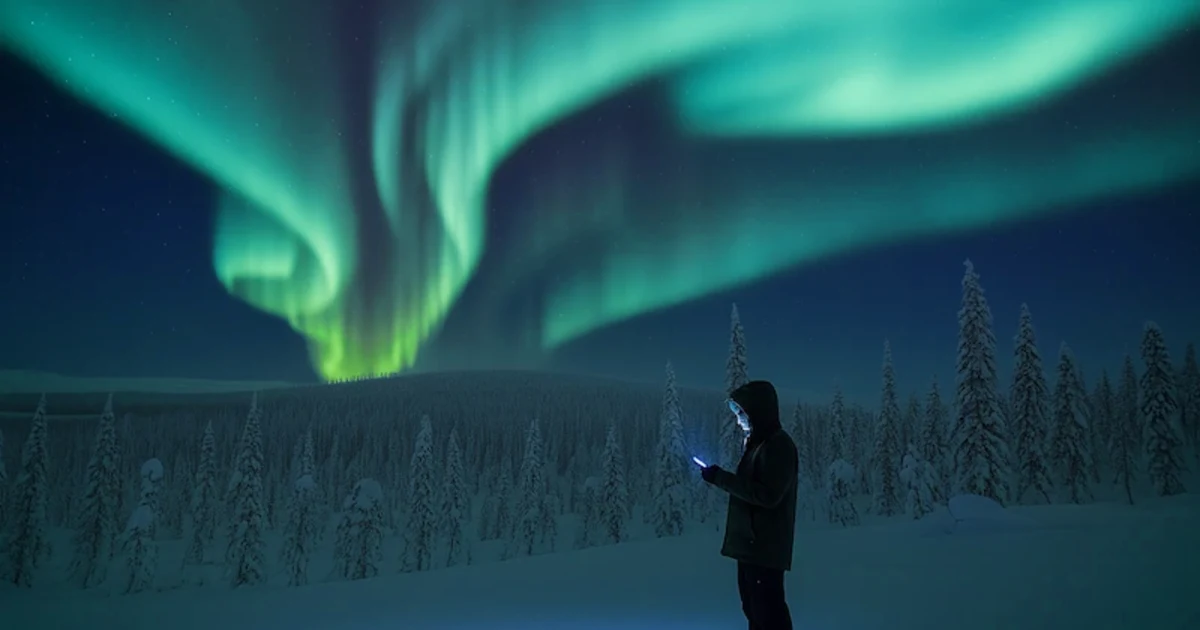
Aurora and northern lights mean the same sky event in most travel and forecast contexts: the aurora borealis, a natural light display that may become visible when geomagnetic activity, darkness, clear skies, and your location line up. This guide is for people planning a northern lights viewing night, photo trip, or last-minute drive who need to decide whether tonight is worth the effort and what to check before leaving.
Quick Answer
If you searched for “aurora and northern lights,” the practical answer is this: do not judge visibility from the name alone. “Aurora,” “northern lights,” “aurora borealis,” and “aurora lights” usually point to the same thing, but seeing them depends on local conditions.
A strong aurora forecast can still fail if clouds cover your sky. A clear sky can still fail if the geomagnetic signal is weak. A dark location can still disappoint if you are too far south for the current activity level. The best decision comes from checking the forecast, cloud cover, darkness window, and viewing location together.
For most people, the question is not “Are the northern lights happening somewhere?” It is “Are the northern lights likely to be visible near me, during the hours I can actually go outside?”
How To Interpret The Signal
The aurora is not like sunset, moonrise, or a scheduled meteor shower. It does not follow a fixed daily timetable. It is driven by space weather, and the visible result on the ground depends on several layers of conditions.
A forecast may show elevated activity, but that does not guarantee a bright overhead display. It may mean a better chance of aurora somewhere within a broad latitude band. For a viewer, the useful signal is local: how active the aurora is expected to be, how far south the viewing oval may reach, whether your sky will be dark, and whether weather will let you see anything.
Common terms can confuse planning:
- “Aurora” is the general term for the light display.
- “Northern lights” usually means aurora borealis in the Northern Hemisphere.
- “Aurora borealis” is the formal name many forecast and science pages use.
- “Aurora lights” is a casual search phrase for the same phenomenon.
- “Northern lights tonight near me” is a local planning query, not just a science query.
The most common edge case is a forecast that looks promising at a global scale but is not useful at your exact location. Another is seeing a faint glow in camera photos but little or nothing with the naked eye. Modern phone cameras can reveal weak aurora that your eyes may not clearly detect, especially near the southern edge of visibility.
Timing is another edge case. Activity can rise before your local sky is dark, peak while clouds move in, or arrive after you have gone home. That is why a “tonight” forecast should be treated as a planning signal, not a promise.
What To Check Before Acting
Before you drive, book a viewing tour, or set up a camera, check four things in order.
Kp Forecast
The Kp forecast is a broad measure of geomagnetic activity. Higher values generally mean aurora may be visible farther from the poles, but Kp is not the whole story. It is best used as a first filter.
If the Kp forecast is low, people in high-latitude regions may still have a chance, while viewers farther south usually need stronger activity. If the Kp forecast is elevated, it is worth checking the rest of the conditions instead of assuming visibility is guaranteed.
Use Kp to answer: “Is there enough activity to make a trip plausible for my latitude?”
Cloud Cover
Cloud cover is often the deciding factor. The aurora can be active above you while the sky remains completely hidden. Thin cloud may still allow a glow or camera capture, but thick cloud usually blocks the show.
Check cloud cover for the exact place you plan to stand, not only the nearest city. A short drive can matter if it gets you away from a cloudy coast, valley fog, or local weather pattern.
Use cloud cover to answer: “Will I have a clear enough view of the northern sky?”
Local Darkness Window
Aurora viewing needs darkness. Civil twilight, bright moonlight, city glow, and short summer nights can all reduce visibility. The best window is usually when your location is fully dark and the sky has the least competing light.
This matters especially for travelers planning around a single evening. A forecast may look good for “today,” but the useful window might be late at night or after midnight. If you are planning photography, you also need time to arrive, set up, focus, and test exposure before the best conditions.
Use the darkness window to answer: “When can I realistically see or photograph aurora from this location?”
Camera Or Viewing Location
Your location affects both visibility and the quality of the experience. A dark, open view toward the north is better than a bright street, wooded area, or urban overlook with blocked horizons.
For naked-eye viewing, choose a place away from direct lights and give your eyes time to adjust. For photography, use a stable camera position, avoid headlights and nearby lamps, and frame the northern horizon if you are not far enough north for overhead displays.
Location planning is especially important for “northern lights tonight near me” searches. The best nearby spot may be outside town, along a lake, in open countryside, or at a higher viewpoint. Safety still comes first: do not stop on unsafe roads, enter closed land, or depend on mobile signal in remote areas.
Use location to answer: “Where can I see the most sky with the least light pollution?”
Where Aurora Forecast Fits
Aurora Forecast is useful when you need to turn broad aurora interest into a local plan. Instead of treating “aurora and northern lights forecast” as one generic answer, it helps you check the conditions that matter for your place and time.
Use the forecast page when you want a quick read on expected activity. This is the first internal link opportunity: the main aurora forecast page should help visitors move from general research to tonight’s conditions.
Use a location guide when you are deciding where to watch. This is the second internal link opportunity: a location-specific guide can explain visibility, darkness, nearby viewing areas, and what a realistic aurora night looks like in that region.
Use an alerts or methodology page when you want to understand how notifications and forecasts are handled. This is the third internal link opportunity: an alerts or methodology page can set expectations about forecast uncertainty, update frequency, and why conditions can change.
The app should not replace judgment. It should reduce the number of separate checks you need to make. A good aurora plan still combines forecast strength, cloud cover, darkness, and a suitable viewing spot.
Alerts are especially helpful when you are flexible. If you live in an aurora-prone area, you may not want to check forecasts all evening. A timely alert can tell you when conditions are worth a look. If you are traveling, alerts can help you adjust dinner plans, sleep timing, or photo setup without constantly refreshing forecast pages.
Location-specific planning is the main value. “Aurora and northern lights tonight” is too broad unless it connects to where you are standing. Your chance near Fairbanks is different from your chance near Seattle, Maine, Scotland, Iceland, or northern Norway. The same forecast can mean “step outside now” for one person and “watch for a rare horizon glow” for another.
Common Mistakes When Planning A Northern Lights Night
The first mistake is checking only one signal. A strong Kp forecast is exciting, but clouds, daylight, and poor location can still ruin the view.
The second mistake is leaving too early. Aurora can come in waves. If conditions are promising and the sky is clear, it may be worth watching through the darker part of the night rather than checking once and going home.
The third mistake is expecting every visible aurora to look like a bright photo. Cameras collect light differently than human eyes. A weak display may appear gray, pale green, or like a faint band before it becomes colorful.
The fourth mistake is staying in a bright location. Even small lights can reduce your ability to see faint aurora. Turn away from streetlights, avoid looking at your phone at full brightness, and give your eyes time.
The fifth mistake is using a regional forecast without checking local sky conditions. A forecast map can show possibility across a wide area, while your exact spot may be cloudy or too bright.
Simple Viewing Workflow
Start with the aurora forecast. If activity looks too low for your latitude, keep expectations modest.
Next, check cloud cover for your actual viewing area. If your town is cloudy but a nearby dark area is clear, decide whether the drive is safe and worth it.
Then check the darkness window. Look for the hours when the sky is truly dark enough, not just the date labeled “tonight.”
Finally, pick the viewing or camera location. Choose open sky, low light pollution, safe access, and a clear view toward the direction where aurora is most likely to appear.
If all four checks line up, it is a reasonable night to try. If only one or two line up, treat it as a low-confidence attempt.
FAQ
When should someone use an app for “aurora and northern lights”?
Use an app when you need local, time-sensitive planning rather than a general explanation. An app is most useful when you want to know whether aurora might be visible near you tonight, when to check the sky, whether alerts are worth enabling, and how conditions are changing for your location.
It is also useful during travel. If you have only a few nights in an aurora region, quick forecast checks and alerts can help you choose the best evening, stay flexible, and avoid wasting a clear dark window.
Are aurora and northern lights the same thing?
In everyday Northern Hemisphere travel and forecast searches, yes. “Northern lights” usually refers to the aurora borealis. “Aurora” is the broader term, but for someone planning a viewing night, the practical checks are the same.
Can I see the northern lights tonight near me?
Maybe, but it depends on your location, the current aurora forecast, cloud cover, darkness, and light pollution. Start with your local forecast and then confirm that your sky will be dark and clear enough.
What matters more: forecast strength or clear skies?
Both matter. Forecast strength tells you whether aurora activity is plausible for your area. Clear skies tell you whether you can actually see it. If either one is poor, your chance drops.
Do I need a camera to see the aurora?
No, but a camera can help reveal weak aurora that is hard to see with the naked eye. For a strong display, you may see movement and color directly. For a faint display, a phone or camera may show more detail than your eyes.

