Aurora Borealis What Is It: Practical Guide
Learn aurora borealis what is it, what to check first, common mistakes, and how Aurora Forecast can help.
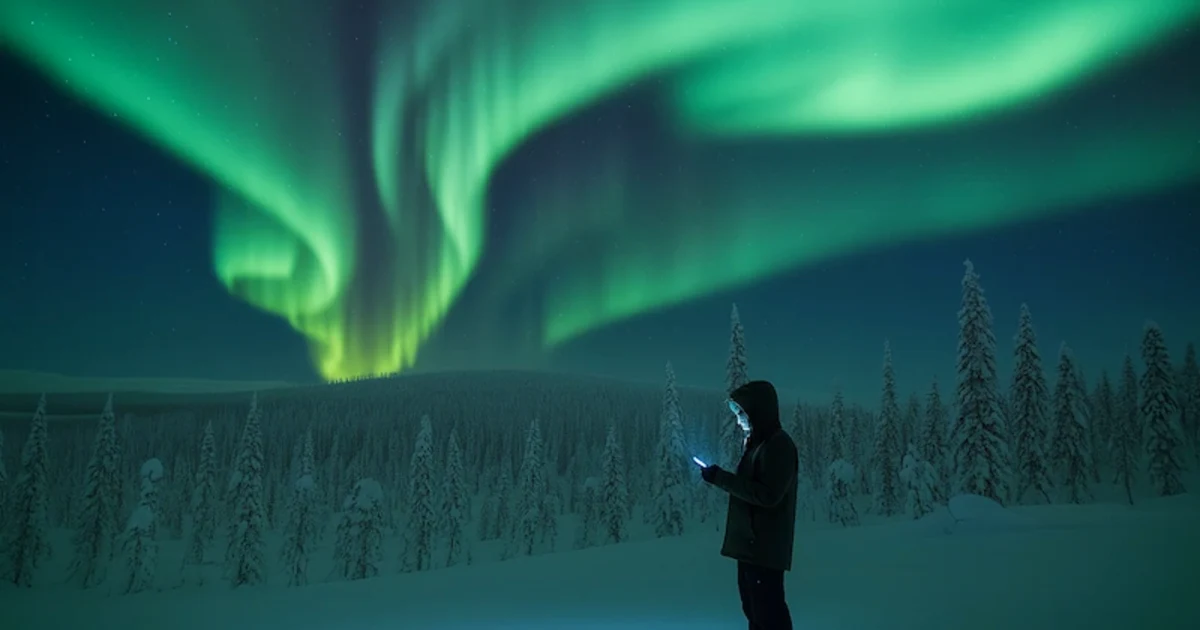
The aurora borealis is the northern lights: a natural light display in the upper atmosphere caused when energetic particles from the Sun interact with Earth’s magnetic field and atmosphere. If you are asking “aurora borealis what is it” because you want to see it tonight, the practical answer is this: the aurora is real, but seeing it depends on solar activity, your location, darkness, cloud cover, and how much light pollution is around you.
Quick Answer
The aurora borealis is not a weather event in the usual sense. It starts with space weather from the Sun, then becomes visible near Earth when charged particles are guided toward polar regions and create glowing curtains, arcs, rays, or patches of light in the sky.
This guide is for people planning a northern lights viewing trip, checking whether tonight is worth staying up for, or deciding where to point a camera. It is not just a science definition. The useful question is not only “what is the aurora?” but also “what should I check before I drive somewhere dark?”
For planning, treat the aurora as a probability signal. A strong forecast helps, but it does not guarantee a visible display from your exact location. A weak forecast does not always mean zero chance, especially at high latitudes. The best decision comes from combining several checks: geomagnetic activity, local cloud cover, darkness, horizon visibility, and your viewing position.
How To Interpret The Signal
In plain language, the aurora borealis is sunlight’s more dramatic cousin: it begins with the Sun sending energetic material toward Earth. Earth’s magnetic field shapes where that energy goes, so the lights are most common around high northern latitudes. That is why people associate the northern lights with Alaska, Canada, Iceland, Norway, Finland, Sweden, Greenland, and similar regions.
The visible aurora can look different depending on intensity and conditions. Sometimes it appears as a pale gray-green glow that is easier to see on a camera than with your eyes. Sometimes it forms bright green arcs, moving curtains, rays, or overhead bands. During stronger events, it can become visible farther south than usual.
Common edge cases matter:
- A camera may show aurora color before your eyes clearly see it.
- A high Kp forecast can be wasted by clouds.
- A clear sky can still disappoint if geomagnetic activity stays low.
- A bright Moon, streetlights, or city glow can wash out faint aurora.
- The aurora may peak before or after you are outside.
- A forecast for a broad region may not match your exact viewing spot.
This is why “aurora borealis what is it tonight” should be read as two questions: what is happening in space weather, and are your local sky conditions good enough to see it?
What To Check Before Acting
Before you leave home, check four things in this order.
Kp Forecast
The Kp forecast is a broad geomagnetic activity signal. Higher Kp usually means aurora can reach farther from the polar regions, but it is not a personal guarantee. Someone in Alaska may have a good chance during conditions that would be too weak for someone much farther south.
Use Kp as a first filter, not the final answer. If the forecast is active for your region, continue checking local conditions. If it is quiet, you may still watch from high-latitude locations, but a long drive from a lower-latitude city may not be worth it.
Cloud Cover
Cloud cover is often the deciding factor. The aurora happens far above normal weather, but you still need a clear line of sight through the lower atmosphere. A strong aurora behind thick cloud is effectively invisible from the ground.
Look for gaps in cloud cover, not just a simple “clear” or “cloudy” label. If the cloud map shows openings north of you, a short move can sometimes matter more than a longer move to a darker but cloudier place.
Local Darkness Window
The aurora needs darkness to be visible. Check sunset, twilight, moonlight, and the length of your local night. Near midsummer in far northern areas, the sky may not get dark enough even if aurora activity exists. In winter, long nights improve your viewing window.
The best practical window is usually when the sky is fully dark and you can stay outside long enough to catch changes. The aurora can pulse, fade, brighten, and shift. A five-minute glance is often not enough.
Camera Or Viewing Location
Choose a location with a dark northern horizon when possible. Avoid parking lots, streetlights, headlights, and buildings blocking the sky. If you are photographing, use a stable tripod, wide view, and a test exposure to confirm whether faint aurora is present.
For naked-eye viewing, give your eyes time to adjust. Do not keep checking a bright phone screen unless you need to update the forecast. Faint aurora can be subtle at first, especially if you are expecting vivid colors immediately.
Where Aurora Forecast Fits
Aurora Forecast is useful when your question shifts from “what is the aurora borealis?” to “what should I do with tonight’s conditions?” The app can help combine forecast checks, alerts, and location-specific planning so you are not relying on a single number or a vague headline.
Use it when you need:
- Forecast checks for your area before making plans.
- Alerts when conditions become more promising.
- Location-specific planning for a trip, photo session, or late-night watch.
- A quick way to compare sky conditions with aurora potential.
The app should be a planning aid, not a promise. The better habit is to use forecasts, alerts, and local sky checks together. That approach helps you avoid two common mistakes: driving far because one signal looks exciting, or giving up too early when conditions are improving.
Useful internal link opportunities for this article:
- Forecast page for current aurora conditions.
- Location guide for country, state, or city viewing advice.
- Methodology or alerts page explaining how forecast signals are interpreted.
FAQ
What is aurora borealis and why does it happen?
The aurora borealis is the northern lights, a natural glow in the upper atmosphere. It happens when energetic particles from the Sun interact with Earth’s magnetic field and atmosphere. Earth’s magnetic field helps guide that activity toward polar regions, which is why the aurora is more common in the far north.
What happens when you see the aurora borealis?
You may see a faint glow, a green arc, moving curtains, rays, or shifting bands of light. Some displays are slow and subtle. Others brighten quickly and appear to ripple across the sky. Cameras often capture stronger color than the human eye, especially during weaker displays.
Which country can see the aurora?
Countries at high northern latitudes have the best regular chances. Common aurora-viewing countries include Norway, Sweden, Finland, Iceland, Canada, the United States through Alaska, and Greenland. During stronger geomagnetic activity, aurora can sometimes be seen farther south than usual.
The aurora australis is the southern counterpart. It appears in the Southern Hemisphere, especially from high southern latitude regions.
Which states have aurora borealis?
In the United States, Alaska has the most reliable aurora viewing. During stronger events, northern states such as Minnesota, North Dakota, Montana, Michigan, Wisconsin, Maine, and Washington may sometimes see aurora, especially from dark locations with a clear northern horizon. Very strong events can push visibility farther south, but that is less predictable.
Is the aurora borealis dangerous?
For a normal viewer on the ground, seeing the aurora is not dangerous. The practical risks are usually ordinary trip risks: cold weather, dark roads, remote locations, ice, fatigue, and poor preparation. Dress for the conditions, tell someone where you are going if traveling remotely, and do not stop in unsafe roadside areas.
Why is it called aurora borealis?
“Aurora” refers to dawn-like light, and “borealis” refers to the north. Together, the term means the northern aurora. The southern version is called aurora australis.
Why are northern lights only in the north?
They are not only in the north. The aurora borealis is the northern version, while the aurora australis occurs in the south. Auroras are most common near polar regions because Earth’s magnetic field shapes where energetic particles enter the upper atmosphere.
When should someone use an app for “aurora borealis what is it”?
Use an app when you are moving from learning the definition to making a real viewing decision. If you want to know whether tonight is worth watching, whether clouds will block the sky, or whether alerts are active for your location, an app can help turn the concept into a practical plan.
Meta
Meta title: Aurora Borealis What Is It: Practical Guide
Meta description: Learn aurora borealis what is it, what to check first, common mistakes, and how Aurora Forecast can help.

