Aurora Borealis Why: Practical Guide
Learn aurora borealis why, what to check first, common mistakes, and how Aurora Forecast can help.
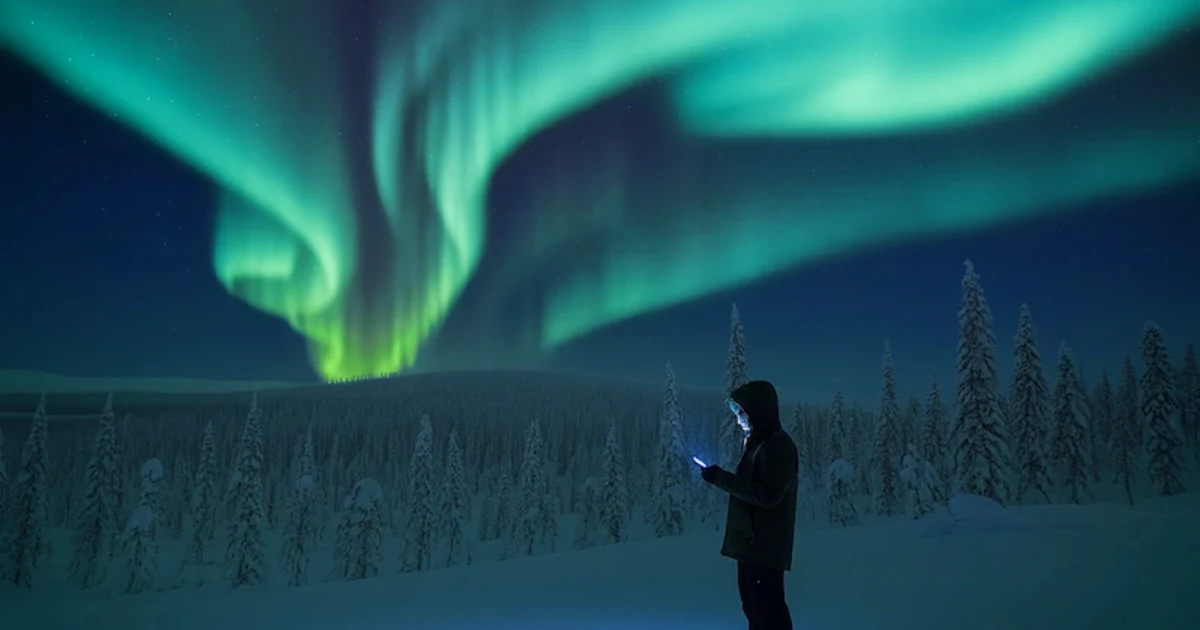
Aurora borealis happens because charged particles from the Sun interact with Earth’s magnetic field and upper atmosphere, creating visible light near the polar regions. If you are searching “aurora borealis why,” you probably want to know why the northern lights happen, why they may appear tonight, and why a forecast can look promising but still fail in your exact location. This guide is for people planning northern lights viewing, short-notice trips, or photo sessions who need practical checks before heading outside.
Quick Answer
The simple answer is: aurora borealis appears when solar activity sends charged particles toward Earth, and those particles are guided by Earth’s magnetic field toward high-latitude regions. When they interact with gases high in the atmosphere, they can glow as green, red, purple, or other colors.
The practical answer is slightly different. Seeing aurora is not just about whether an aurora exists somewhere. You also need enough geomagnetic activity, clear skies, darkness, and a viewing location away from bright lights. That is why two people in the same region may have different results on the same night.
For planning, treat “aurora borealis why” as three questions:
- Why does aurora happen at all?
- Why might aurora be possible tonight?
- Why might I still not see it from my location?
A good forecast helps with the second question, but your local conditions decide the third.
How To Interpret The Signal
Aurora forecasts are built around space weather signals. The most familiar number is the Kp index, which gives a broad picture of geomagnetic activity. A higher Kp usually means aurora may be visible farther from the polar regions, but it is not a guarantee for one town, one hill, or one camera spot.
Think of the forecast as a probability signal, not a promise. It tells you whether the atmosphere and magnetic conditions may support aurora. It does not remove local problems like clouds, moonlight, city glow, blocked horizons, or arriving after the active window has passed.
Common edge cases include:
- A high Kp forecast, but heavy cloud cover hides the sky.
- Clear skies, but geomagnetic activity arrives before local darkness.
- Aurora visible to a camera, but too faint for the naked eye.
- Activity visible farther north, but not at your latitude.
- A short aurora burst that happens before you reach your viewing spot.
- Bright moonlight or urban light pollution reducing contrast.
- A forecast that updates after solar wind conditions change.
This is why “aurora borealis why tonight” often has a frustrating answer: the large-scale signal may be real, but the local window may be poor.
The aurora is also not only a northern event. The southern counterpart is called aurora australis. Both are caused by related space weather processes, but visibility depends on hemisphere, latitude, season, darkness, and local weather.
What To Check Before Acting
Before driving out, setting up a camera, or waking someone up for a viewing attempt, check four things.
Kp forecast
Start with the Kp forecast or another geomagnetic activity indicator. The farther you are from the usual aurora zone, the stronger the activity generally needs to be. If you are already in a northern viewing area, a modest signal may be enough. If you are much farther south, you usually need a stronger event and a clear northern horizon.
Do not use Kp alone. It is useful for a broad yes/no decision, but it is not precise enough to answer whether your exact field, lake, overlook, or backyard will work.
Cloud cover
Clouds are the most common reason a good aurora night becomes a missed night. Even strong aurora can be invisible behind a solid cloud layer.
Look at cloud cover for your exact area, not just the nearest large city. Mountain valleys, coastlines, lakes, and local weather systems can change conditions quickly. If your first location is cloudy, a nearby darker or clearer spot may still be worth checking.
Local darkness window
Aurora needs a dark sky to be seen well. Check sunset, twilight, moonlight, and the time when your location becomes truly dark enough for viewing.
In far northern areas, summer nights may be too bright for reliable aurora watching even if geomagnetic activity exists. In winter, long nights improve your odds, but weather can become the limiting factor.
The best viewing window is usually when three things overlap: active aurora conditions, clear sky, and local darkness.
Camera or viewing location
A camera can detect faint aurora before your eyes do, especially with a longer exposure. If you are unsure whether a glow is real aurora, take a test photo facing the expected direction.
Choose a viewing location with:
- A clear view toward the relevant horizon.
- Low light pollution.
- Safe access and parking.
- Minimal obstruction from trees, buildings, or hills.
- Enough space to set up a tripod if you are photographing.
A real aurora borealis display can look dramatic, but weaker displays may appear as a pale band, grey-green glow, or subtle movement before the camera reveals stronger color.
Where Aurora Forecast Fits
Aurora Forecast is useful when you want location-specific planning rather than a generic explanation. The app can help you compare the forecast signal with your actual viewing conditions, so you are not relying on one number or a vague “maybe tonight” alert.
Use it for:
- Forecast checks before planning a viewing attempt.
- Alerts when conditions become more promising.
- Location-specific planning for your current spot or a trip destination.
- Comparing timing with your darkness window.
- Deciding whether to wait, move, or skip the night.
Product tools should not replace common sense. If the forecast is strong but your sky is fully clouded, you still need a better location or a different night. If the forecast is moderate but you are in a dark northern area with clear skies, it may still be worth stepping outside.
For SEO review, useful internal link opportunities are the aurora forecast page, a northern lights location guide, and the methodology or alerts page.
FAQ
What actually causes aurora borealis?
Aurora borealis is caused by charged particles from the Sun interacting with Earth’s magnetic field and upper atmosphere. Earth’s magnetic field guides many of these particles toward polar regions. When they interact with gases high above the ground, the energy can be released as visible light.
That is why auroras are more common near the poles, why they can strengthen after solar activity, and why the same process has a southern version called aurora australis.
When should someone use an app for “aurora borealis why”?
Use an app when your question changes from “why does aurora happen?” to “why might aurora be visible for me tonight?” An app is most useful when you need timing, alerts, local forecast checks, and help comparing sky conditions with your viewing location.
If you are planning a photo trip, driving away from city lights, or choosing between several possible nights, an app can save time by showing whether the practical conditions line up.
Why are northern lights mostly seen in the north?
They are mostly seen in the north because Earth’s magnetic field tends to guide charged particles toward polar regions. The same kind of display can happen in the south as aurora australis. During stronger geomagnetic activity, aurora can sometimes be visible farther from the poles.
Is aurora borealis dangerous to watch?
Watching aurora from the ground is not considered dangerous in normal viewing situations. The bigger practical risks are usually travel-related: cold weather, icy roads, remote locations, darkness, weak phone signal, or unsafe parking. Plan your viewing spot like any other night trip.
Why is it called aurora borealis?
“Aurora” refers to the dawn-like glow, and “borealis” refers to the north. The phrase is commonly used for the northern lights. The southern lights are called aurora australis.
Meta title: Aurora Borealis Why: Practical Viewing Guide
Meta description: Learn aurora borealis why, what to check first, common mistakes, and how Aurora Forecast can help.

