Solar Storm Aurora Borealis: Practical Guide
Learn solar storm aurora borealis, what to check first, common mistakes, and how Aurora Forecast can help.
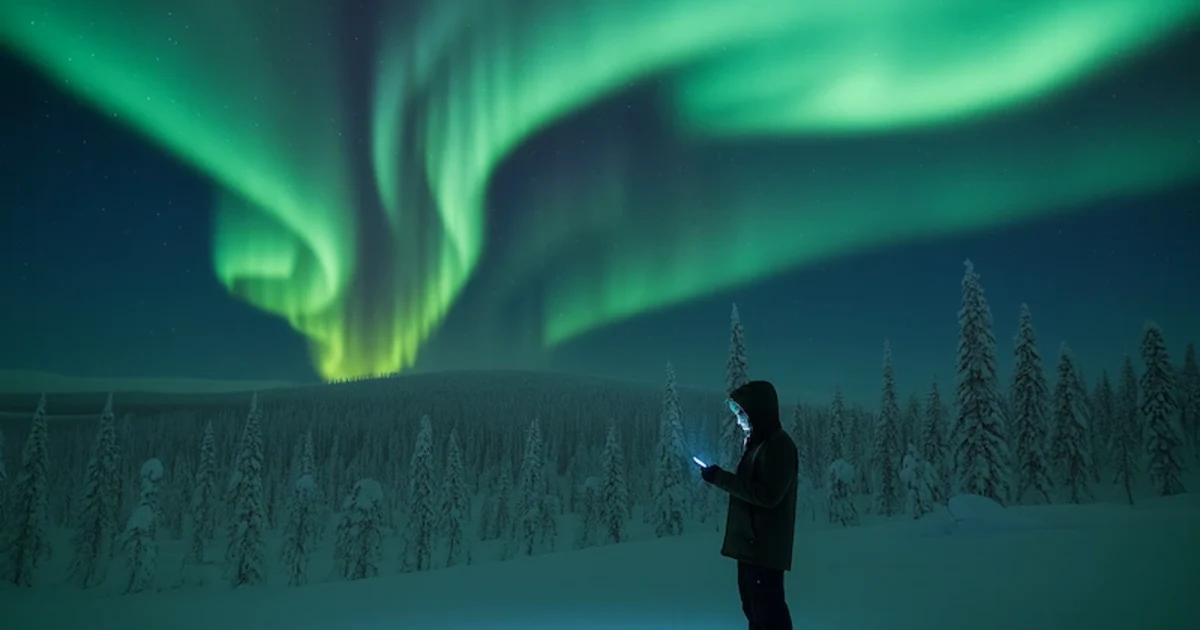
A solar storm aurora borealis event means charged particles from the Sun may strengthen the northern lights, but it does not guarantee visible aurora from your location. For people planning a viewing night or photo trip, the practical answer is: check the aurora forecast, your local darkness window, cloud cover, and a realistic viewing location before you travel.
Quick Answer
“Solar storm aurora borealis” usually refers to a geomagnetic storm that can push aurora activity farther south than usual or make northern lights brighter at high latitudes. The stronger the space weather signal, the better the chance of aurora, but visibility still depends on local conditions.
This advice is for people who want to decide whether tonight is worth watching, whether to drive away from city lights, or whether to prepare camera gear. It is also useful for travelers comparing possible viewing locations over the next few days.
A solar storm is only one part of the decision. You still need darkness, clear skies, a view toward the right horizon, and enough patience for aurora activity that may rise and fade during the night.
How To Interpret The Signal
A solar storm begins with activity on the Sun. When that activity sends energetic material toward Earth, it can disturb Earth’s magnetic field. If the disturbance is strong enough, aurora can become more active and visible across a wider area.
In practical terms, you do not need to understand every space weather measurement before going outside. You need to know whether the storm is expected to reach Earth, whether the timing overlaps with your local night, and whether the expected aurora strength is high enough for your latitude.
The common shorthand is the Kp index. A higher Kp usually means aurora may be visible farther from the poles. But Kp is a broad planetary measure, not a promise for your exact town, hill, beach, or campsite. Local cloud cover and light pollution can matter more than a small change in the forecast.
Common edge cases include:
- A strong solar storm arrives during daylight where you live.
- The forecast is promising, but clouds block the sky.
- Aurora is active, but only low on the northern horizon.
- The storm peaks earlier or later than expected.
- A camera captures faint color that your eyes barely see.
- City lights wash out a weak display.
- A short burst happens between forecast updates.
This is why “solar storm warning today” or “geomagnetic storm today” searches need a second layer of checking. A storm alert can be useful, but the viewing decision should be local.
What To Check Before Acting
Before you drive, book a last-minute trip, or stay outside for hours, check these four things.
Kp Forecast
Start with the Kp forecast or another aurora activity indicator. The goal is not to chase a perfect number. The goal is to decide whether your location has a realistic chance.
If you are already in a high-latitude region, moderate activity may be enough. If you are farther south, you usually need a stronger storm and a clear northern horizon. A “solar storm aurora borealis prediction” is most useful when it is paired with your latitude and timing.
Watch for changes as the event develops. Aurora forecasts can shift because solar material does not always arrive exactly when expected. A forecast that looked good in the afternoon may be less useful if the main activity arrives after sunrise.
Cloud Cover
Clear sky is essential. Even a strong aurora can be invisible behind thick cloud.
Check cloud cover at your exact viewing spot, not only the nearest city. A coastal overlook, valley, mountain pass, or rural road can have very different conditions. If the forecast shows broken cloud, look for gaps during the darkest hours rather than judging the whole night as a simple yes or no.
For photographers, thin cloud can sometimes add texture, but it can also blur faint aurora. If your goal is a reliable sighting, prioritize open sky.
Local Darkness Window
Aurora needs darkness. A solar storm during daytime may still be scientifically interesting, but it will not help visual viewing until local night.
Check sunset, twilight, moonlight, and the hours when the sky is truly dark. In northern summer, some places never get fully dark, which can make weak aurora harder to see. In winter, longer nights give you more chances for activity to line up with darkness.
Moonlight is not always a deal breaker. Bright aurora can show through it, and photographers sometimes use moonlight to illuminate landscapes. For faint aurora, darker conditions are better.
Camera Or Viewing Location
Choose a location before the best part of the night begins. Look for:
- Low light pollution.
- Open view toward the northern sky in the Northern Hemisphere.
- Safe parking or walking access.
- Clear horizon without buildings, trees, or hills blocking the view.
- A place where you can wait comfortably.
If you are using a phone or camera, test night mode before you leave. A camera may reveal color before your eyes do, especially during weaker displays. Use that as a clue, not as a guarantee that a bright visible display is about to happen.
A “solar storm aurora borealis map” can help you compare broad visibility zones, but it should not replace local planning. The best map still cannot remove clouds, city glare, or blocked horizons.
Where Aurora Forecast Fits
Aurora Forecast is useful when you need to connect space weather signals with a real viewing decision. Instead of treating a solar storm as a simple alert, use forecast checks to compare timing, expected activity, and your location.
For planning, the most useful workflow is:
- Check the aurora forecast for the current night.
- Compare the expected activity with your location.
- Confirm cloud cover and darkness.
- Set alerts if conditions may improve later.
- Pick a viewing spot before the likely peak.
Alerts are especially helpful because aurora activity can change quickly. If the signal strengthens after you stopped checking manually, an alert can bring you back to the sky at the right moment.
Location-specific planning matters because two people searching “solar storm aurora borealis today” may need completely different advice. Someone in Alaska, Minnesota, Maine, or northern Scotland has a different threshold than someone much farther south. The same storm can be a strong opportunity in one place and only a long-shot chance in another.
Useful internal link opportunities for this article:
- Link to the aurora forecast page for current viewing conditions.
- Link to a location guide for choosing better northern lights viewing spots.
- Link to a methodology or alerts page explaining how forecast checks and notifications work.
Common Mistakes With Solar Storm Aurora Searches
The biggest mistake is treating a solar storm as a guaranteed light show. It is better to think in probabilities. A stronger storm increases the chance, but the final result depends on timing, sky conditions, and where you are standing.
Another mistake is relying on one screenshot or one social post. Aurora activity can be regional and fast-moving. A photo from another state or province may not reflect your sky.
People also over-focus on the word “warning.” A solar storm warning today may be important for space weather monitoring, but for aurora viewing it still needs translation into local nighttime visibility. The question is not only “Is there a storm?” It is “Will the active period overlap with dark, clear sky where I can see north?”
For photo trips, the mistake is waiting too long to move. If the forecast is promising and cloud gaps are limited, choose the best practical location early. You do not need to chase every update, but you do need enough time to get away from glare and find a safe viewpoint.
Practical Viewing Plan For Tonight
If you are deciding what to do tonight, use this simple sequence.
First, check whether aurora activity is elevated. If the forecast is weak for your latitude, stay realistic. You may still watch casually, but a long drive may not be worth it.
Second, check your local dark hours. If the strongest activity is expected before nightfall or after sunrise, the chance of seeing aurora drops.
Third, compare cloud cover in several nearby directions. Sometimes a 30-minute drive to clearer sky matters more than driving north.
Fourth, pick a place with a clear northern view. Avoid bright parking lots, streetlights, and areas where trees block the horizon.
Fifth, give the sky time. Aurora can appear as a pale glow, faint vertical rays, or a moving band before it becomes obvious. Use your camera to test the sky, but keep checking with your eyes too.
FAQ
When should someone use an app for “solar storm aurora borealis”?
Use an app when you need local, time-sensitive guidance rather than a general solar storm headline. An app is most useful before and during a possible viewing night, when you want to check forecast strength, receive alerts, compare locations, and decide whether the sky conditions justify going out.
Does a solar storm always mean northern lights will be visible?
No. A solar storm can increase aurora chances, but visibility still depends on your latitude, the timing of the storm, darkness, cloud cover, light pollution, and the direction of your view.
What is the most important thing to check first?
Check whether the forecasted activity is strong enough for your location and whether it overlaps with local darkness. After that, cloud cover is usually the deciding factor.
Can I see aurora from a city during a solar storm?
Sometimes, if the storm is strong enough. But city lights make faint aurora much harder to see. A darker location with an open northern horizon gives you a better chance.
Is a live map enough for planning?
A live map helps, but it is not enough by itself. Pair it with local cloud cover, darkness times, and a realistic viewing location before making plans.
Meta Title
Solar Storm Aurora Borealis: Forecast, Timing, And Viewing Checks
Meta Description
Learn solar storm aurora borealis, what to check first, common mistakes, and how Aurora Forecast can help.

