Трекер полярного сияния
Отслеживайте видимость сияния в 1023 локациях. Текущий KP 2.0 — слабая активность. Облачность, фаза луны и темнота.
Радар сияния: эта карта показывает текущий овал NOAA. Сверяйте с облачностью и темнотой; это прогнозная карта, не видеотрансляция.
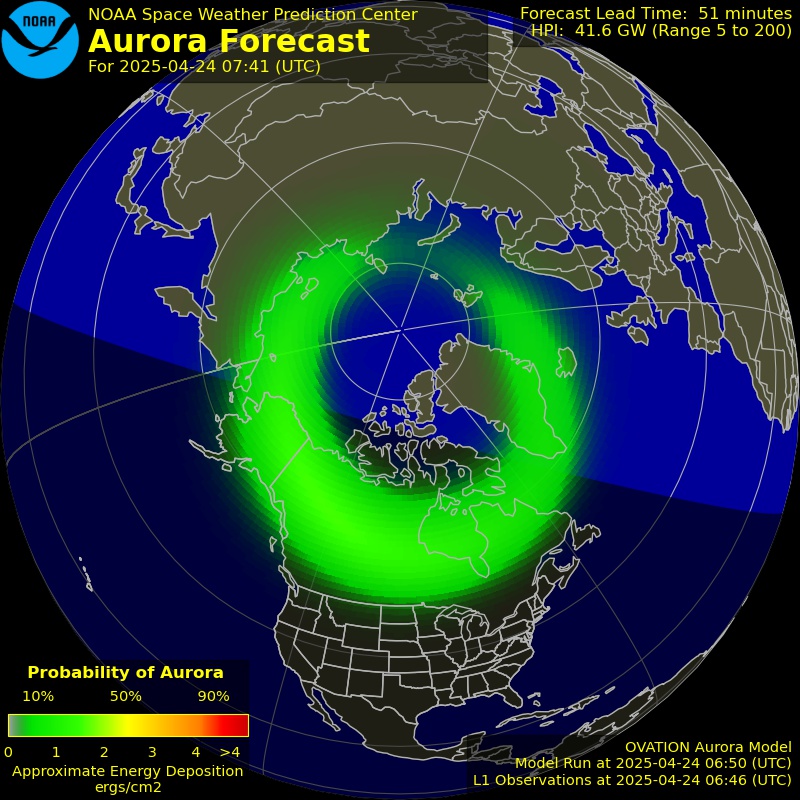
Источник: NOAA Space Weather Prediction Center. Обновляется каждые 30 минут.
🌟 Где полярное сияние видно прямо сейчас
Полярное сияние в данный момент видно в 12 локациях. Данные в реальном времени обновляются каждые 20 минут.
Ранкин-Инлет
Канада
Текущий статус
Likely Visible
Смотреть прогноз →
Икалуит
Канада
Текущий статус
Likely Visible
Смотреть прогноз →
Йеллоунайф
Канада
Текущий статус
Likely Visible
Смотреть прогноз →
Черчилл
Канада
Текущий статус
Likely Visible
Смотреть прогноз →
Томпсон
Канада
Текущий статус
Likely Visible
Смотреть прогноз →
Форт-Мак-Марри
Канада
Текущий статус
Likely Visible
Смотреть прогноз →
Уайтхорс
Канада
Текущий статус
Likely Visible
Смотреть прогноз →
Сависсивик
Гренландия
Текущий статус
Might be Visible
Смотреть прогноз →
Илулиссат
Гренландия
Текущий статус
Might be Visible
Смотреть прогноз →
Кактовик
Соединенные Штаты
Текущий статус
Might be Visible
Смотреть прогноз →
Хей-Ривер
Канада
Текущий статус
Might be Visible
Смотреть прогноз →
Сент-Майкл
Соединенные Штаты
Текущий статус
Might be Visible
Смотреть прогноз →
Что такое Активность (Kp)?
KP индекс измеряет геомагнитную активность по шкале от 0 до 9. Более высокий KP означает более сильное полярное сияние, которое можно увидеть южнее от магнитных полюсов.
KP 0-2: Слабая активность — видно только на очень высоких широтах (Фэрбанкс, Тромсё)
KP 3-5: Умеренная — видно в средних широтах (Рейкьявик, Йеллоунайф, Анкоридж)
KP 6-7: Сильная — видно на более низких широтах (Сиэтл, Эдинбург, Южная Канада)
KP 8-9: Экстремальная — видно в южных регионах (редкие явления, Нью-Йорк, Париж)
Важно: Мы учитываем не только Kp — облачность, луна и темнота одинаково важны. Даже при сильной буре сияние не видно из-за туч или в полнолуние.
Get Alerted Before Aurora Appears
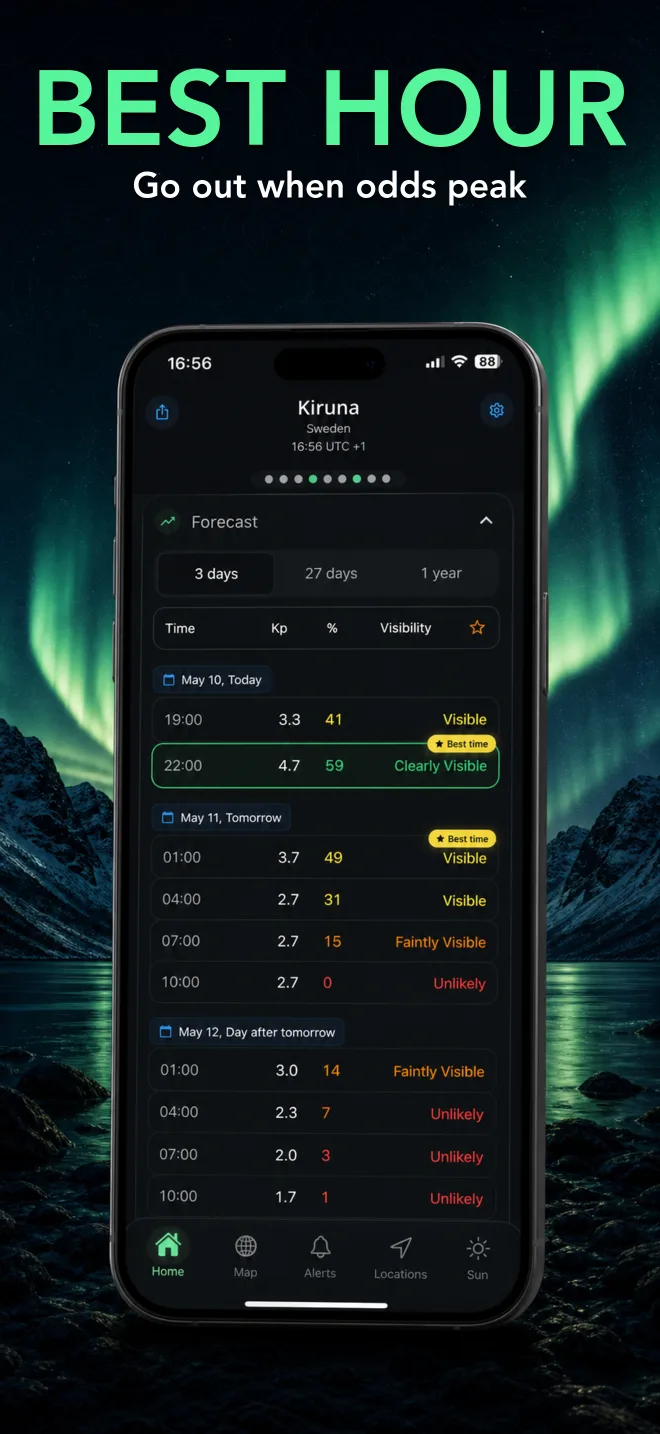
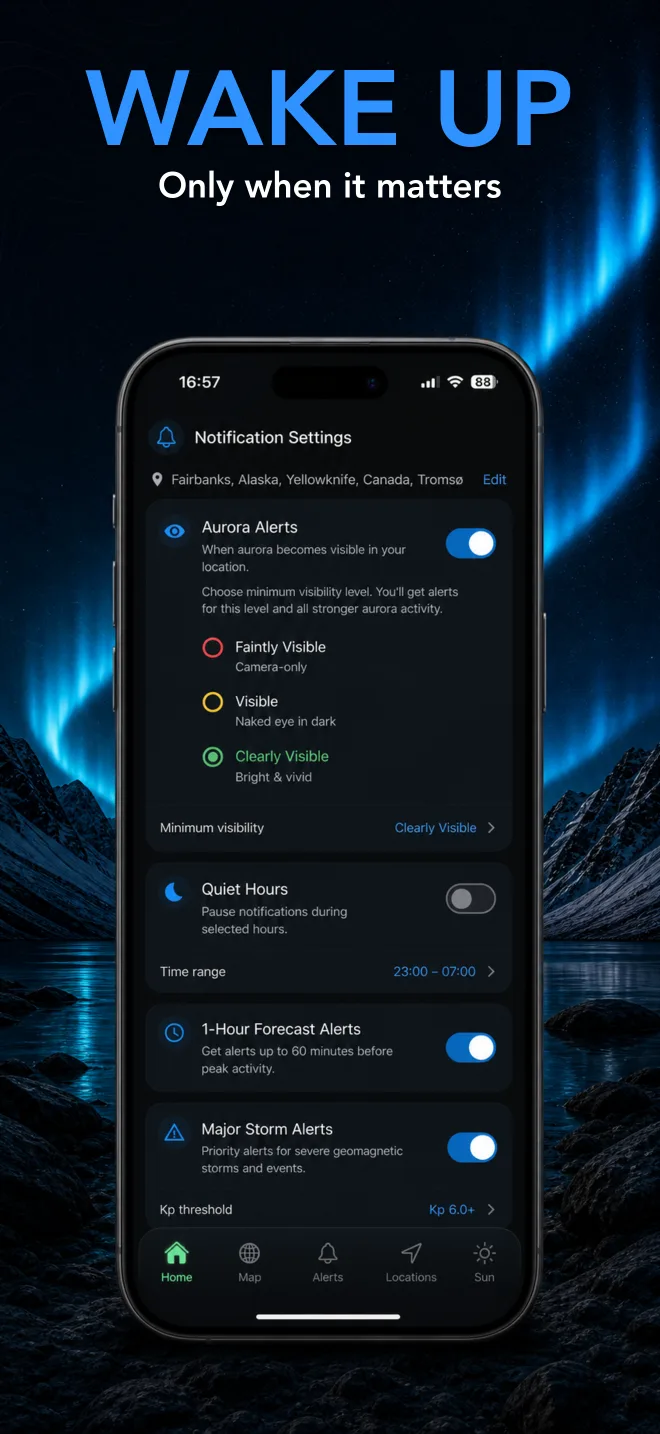
Push alerts 20–90 min before northern lights. 72h forecast, cloud cover, 11 years of historical data.
- KP и погода в реальном времени
- Push-уведомления
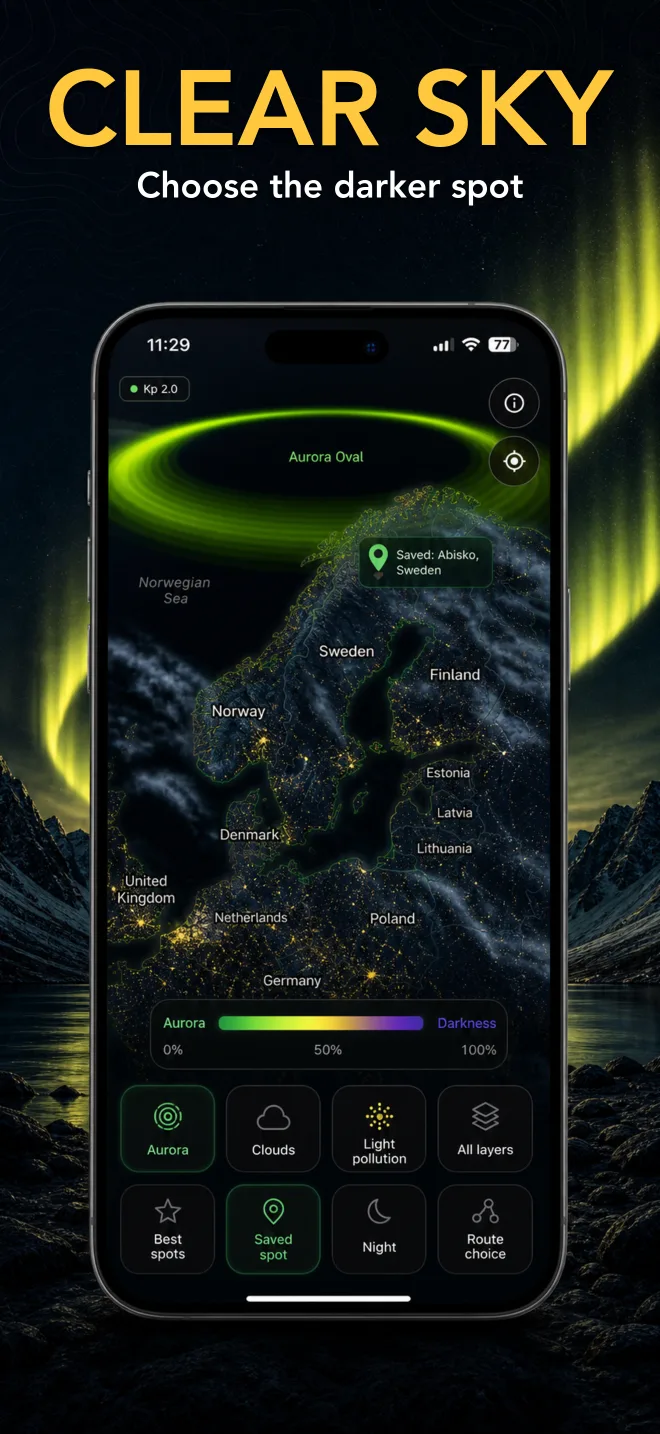
- Карта сияний онлайн
- Прогноз облачности
Frequently Asked Questions
What is the Kp index?
The Kp index measures geomagnetic activity on a scale from 0 to 9, published by NOAA SWPC every 3 hours. Higher Kp means a larger auroral oval and aurora visible at lower latitudes. Kp 3+ is visible in northern Scandinavia, Kp 5+ reaches Scotland and northern US states, Kp 7+ can reach central Europe.
Can I see aurora tonight?
Aurora visibility depends on 5 factors: Kp index (geomagnetic activity), cloud cover, moon phase, hours of darkness, and your magnetic latitude. All five must align — even strong Kp activity is invisible behind clouds or during twilight. Check the forecast for your city to see if conditions align tonight.
What causes the northern lights?
Aurora borealis occurs when charged particles from the solar wind enter Earth's magnetosphere and collide with atmospheric gases. Oxygen produces green light (90–150 km altitude) and red light (above 200 km), while nitrogen creates purple and blue hues. Coronal mass ejections (CMEs) from the Sun trigger the strongest displays.
How does aurora forecasting work?
AuroraMe uses a 5-factor prediction model: real-time Kp index from NOAA SWPC, local cloud cover forecasts, moon phase and illumination, hours of darkness at your location, and magnetic latitude (which determines your minimum Kp threshold). These factors are combined into a single visibility status updated every 15 minutes.
When is the best time to see the northern lights?
The best season is September through March in the northern hemisphere, with peak activity around the equinoxes (September-October, February-March) due to the Russell-McPherron effect. The best hours are 10 PM to 2 AM local time, when geomagnetic substorms peak. Solar Cycle 25 is near its maximum in 2025-2026, making this period exceptionally active.
What Kp level do I need for my location?
Your required Kp depends on magnetic latitude. The formula is roughly: Required Kp = (66 - Magnetic Latitude) / 2. For example, Tromsø (67.4° MLAT) needs just Kp 1, Edinburgh (58.2° MLAT) needs Kp 4, and London (53.4° MLAT) needs Kp 6. Check any city page for the exact Kp threshold calculated from its magnetic latitude.

App Store

Google Play
Scan to download AuroraMe — Free Aurora Alerts
Download on the App Store
GET IT ON Google Play
App Store
Google Play